
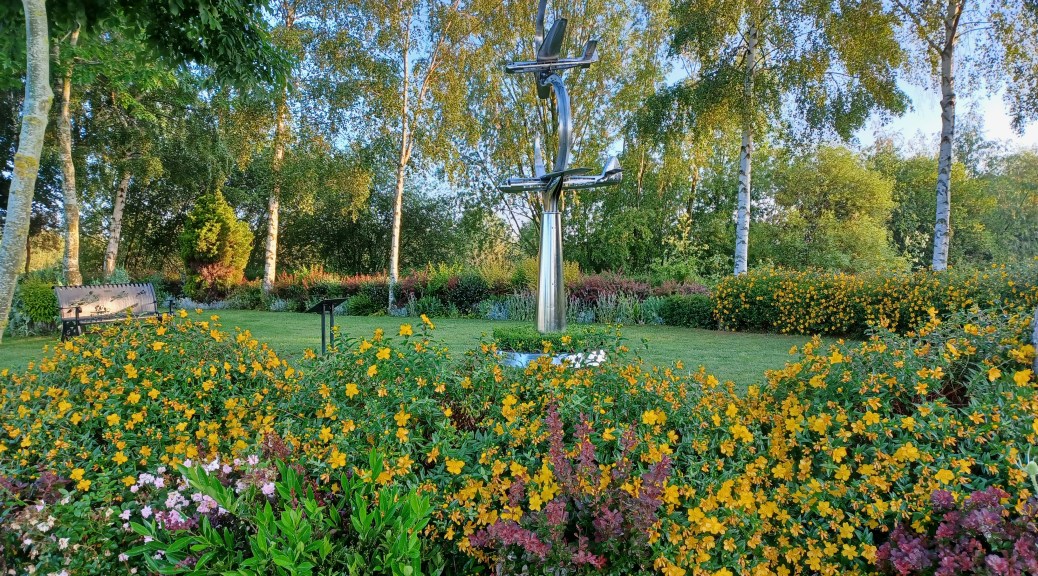
Meet “PEGGY” – this is our nickname for the Pegasus Bridge Memorial Flight. This memorial has been created from an original sketch by Mike Colton and brought to life by Bromley O’Hare – Artist/Blacksmith and many specialist companies in the West Midlands.
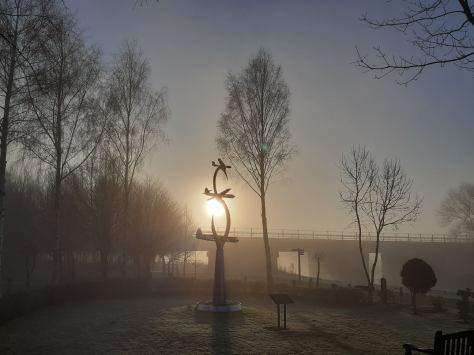
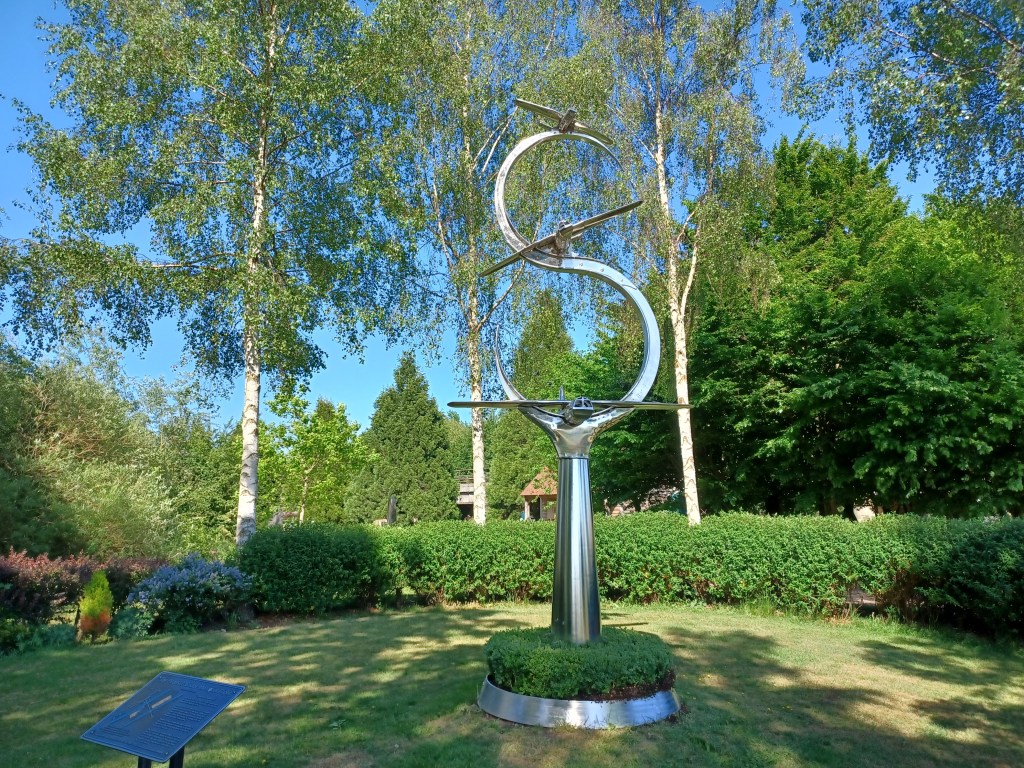

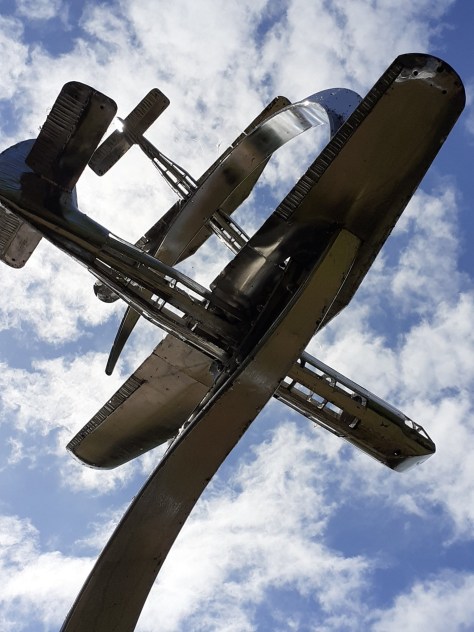
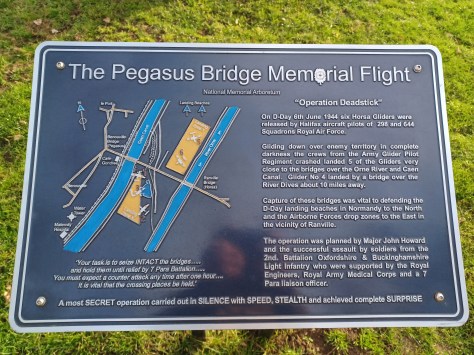
- Memorial Text
- The Pegasus Bridge Memorial Flight
- “Operation Deadstick”
- On D-Day 6th June 1944, siz Horsa Gliders were released by Halifax aircraft pilots of 298 and 644 Squadrons Royal Air Force.
- Gliding down over enemy territory the crews from the Glider Pilot Regiment crash landed 5 of the Gliders very close to the bridges over the Orne River and Caen Canal. Glider No. 4 landed by a bridge over the River Dives about 10m miles away.
- Capture of these bridges was vital to defending the D-Day landing beaches to the North and the Airborne drop zones to the East in the vacinity of Ranville.
- The operation was planned by Major John Howard and the successful assault by soldiers from the 2nd Battalion Oxfordshire and Buckinghamshire Light Infantry who were supported by Royal Engineers, Royal Army Medical Corps and a 7 Para liaison officer.
- A most SECRET operation, carried out in SILENCE with SPEED, STEALTH and achieved complete SURPRISE.
- Operational Orders
- “Your task is to seize INTACT the bridges….
- and hold them until relief by 7 Para….
- you must expect a counter attack any time after one hour….
- it is vital that the crossing places be held.”
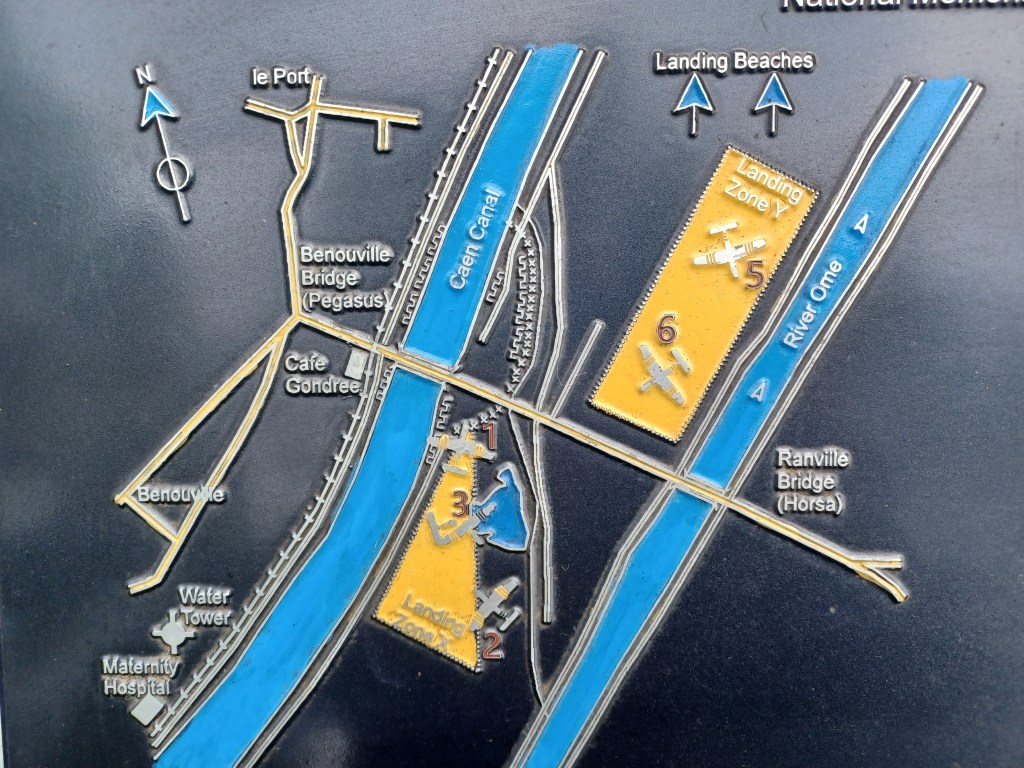
This memorial was completed in May 2018.


- Further Information
- Pegasus Bridge
- Pegasus Bridge Documentary
- Soldiers of Oxfordshire Museum Pegasus Bridge Presentation
- Pegasus Bridge Memorial Museum, Benouville, France
- Oxfordshire and Buckinghamshire Light Infantry Nominal Roll
- Ox & Bucks D-Day 6th June 1944
- Glider Pilot Regiment
- Glider Pilot Regiment Society
- Military Gliders WW2
PAGE UPDATED 20TH OCTOBER 2025
 alliedspecialforcesmemorialgrove.org